Jūsu Tīmekļa pārlūks nespēj pilnvērtīgi attēlot šo lapu, jo šī lapa ir būvēta balstoties uz moderniem Tīmekļa standartiem. Lai apskatītu šo lapu, aicinām Jūs izvēlēties kādu no modernajiem Tīmekļa pārlūkiem, kas pieejami zemāk.
Bezmaksas pārlūkprogrammas - visas pārlūkprogrammas nodrošina vienādas pamatfunkcijas un ir viegli lietojamas. Izvēlieties, kuru pārlūkprogrammu vēlaties lejupielādēt:
On September 5, 2024, international industry experts participated in the “Value in Printing” seminar, organized by Poligrāfijas grupa MŪKUSALA at the ATTA CENTRE conference center. The seminar addressed key questions about the value of print in the digital era, the challenges facing education and society, and the evolving role of printed media in a digital world.
We live in a very interesting time – between the “here and now” and the “data cloud”, and we switch from one state to the other countless times during the day. How does this affect us? How does it change human thinking? How does it impact our reading habits? Why are reading and writing skills important? How to read and write correctly? Seminar attendees sought answers to these and many other questions and outlined future scenarios.
The event featured insights, research findings, and reflections from Håvard Grjotheim, President of NOPA and Chairman of the Board of ScandBook Holding AB; Jeremy Tawedian, former Research Assistant and currently a Certification Assistant at INTERGRAF; Ilva Skulte, Associate Professor at the Faculty of Social Sciences, Riga Stradiņš University, and literary critic; and Silvija Tretjakova, founder and head of the Children’s Literature Centre at the National Library of Latvia.
When I read a text in digital format, I notice that I read much faster and sometimes skip over parts. The next day, I often don’t remember what I read at all. This isn’t just an issue for school-age children — it affects us all. The question is: what kind of future do we want? And do we want creative people in it, people who can reflect deeply?” shared Håvard Grjotheim, a long-time leader in the printing sector and advocate for the coexistence of printed books and digital technologies.
During his speech, Grjotheim, the President of the Nordic Printing Association (NOPA), highlighted issues within the modern education system, emphasised that young people are the future consumers of print, and acknowledged the value of digital reading tools, especially for information retrieval. However, he firmly believes that printed materials — particularly books — are essential for deeper learning and for fostering societal trust. In Scandinavia, more and more teachers are returning to traditional, paper-based methods when teaching reading and writing. Grjotheim cited studies showing that reading printed materials enhances immersion, text comprehension, and deep reading.
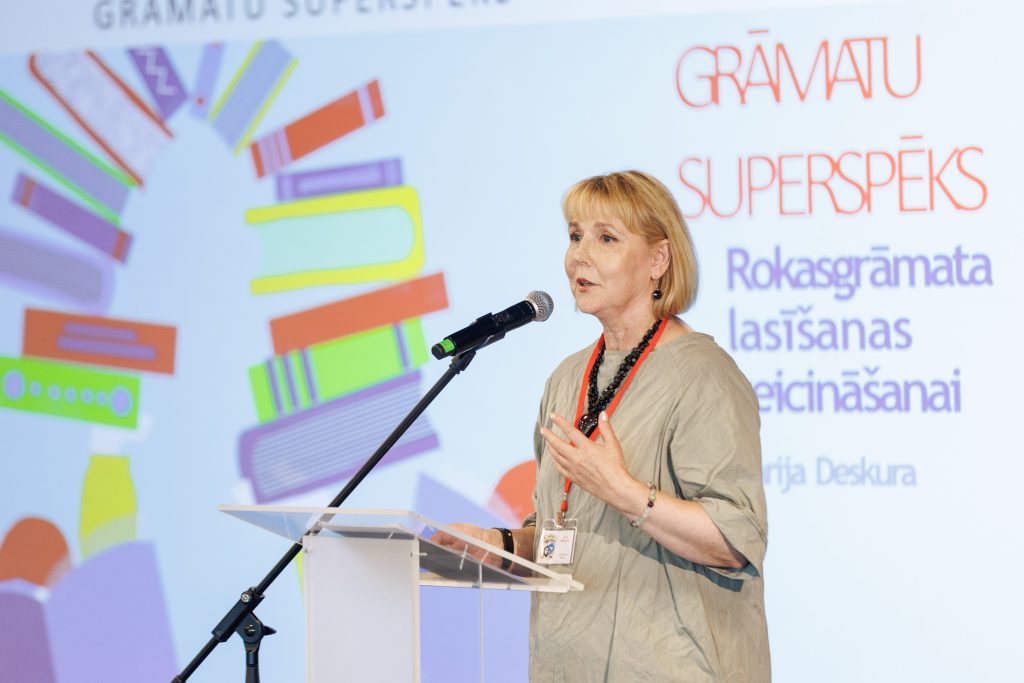
Eighty-five percent of brain development in children occurs by the age of three. Unfortunately, we tend to introduce reading programs later,” noted Silvija Tretjakova. “Shared reading and activities like browsing books together, discussing the content, or interacting with books in other ways support a child’s cognitive, emotional, and social development. A study published in Social Science & Medicine concluded that if children do not learn to read fluently by the end of third grade, they often struggle with academic material throughout school.” Tretjakova, founder and the head of the Children’s Literature Center at the National Library of Latvia, who has worked with young readers for over 30 years, emphasised the importance of early reading and investing more in preschool readers.
Fifty-six percent of Europeans believe digital communication is more environmentally friendly than print — but is that really true?” asked Jeremy Tawedian, former Research Assistant and currently a Certification Assistant at INTERGRAF. In his presentation, he analysed the sustainability, effectiveness, and public perception of print and digital communication. INTERGRAF, the European printing and digital communication industry association, represents national printing federations and advocates for innovation and sustainable development. It voices out the industry’s challenges, defends interests of printing companies, participates in EU policy-making processes, and promotes innovation and sustainable development. In 2024, INTERGRAF published Tawedian’s research review comparing print and digital media across 75 studies. His analysis covered sustainability, reading habits, marketing effectiveness, and the digital divide, ultimately advocating for a balanced, critical view of both mediums. “There’s no need to exclude one or the other — print and digital tools can complement each other in various marketing strategies,” he said, citing QR codes as a successful example.
Numerous studies show that students’ reading skills have become more superficial in the digital age. Concentration has declined, while longer texts are better understood when read on paper. The core issue isn’t digital devices themselves, but the tendency to replace all traditional methods with them. Digital text competes with multiple sources of distraction. Although many questions remain about the long-term effects of digital media, some findings are clear: children today process information faster — but less accurately. Studies confirm that reading and writing on paper enhances focus and comprehension. “We see that children and young people are reading less and less, and we need to reverse this trend. Investing in preschool readers and school libraries is a vital first step,” said Tretjakova.
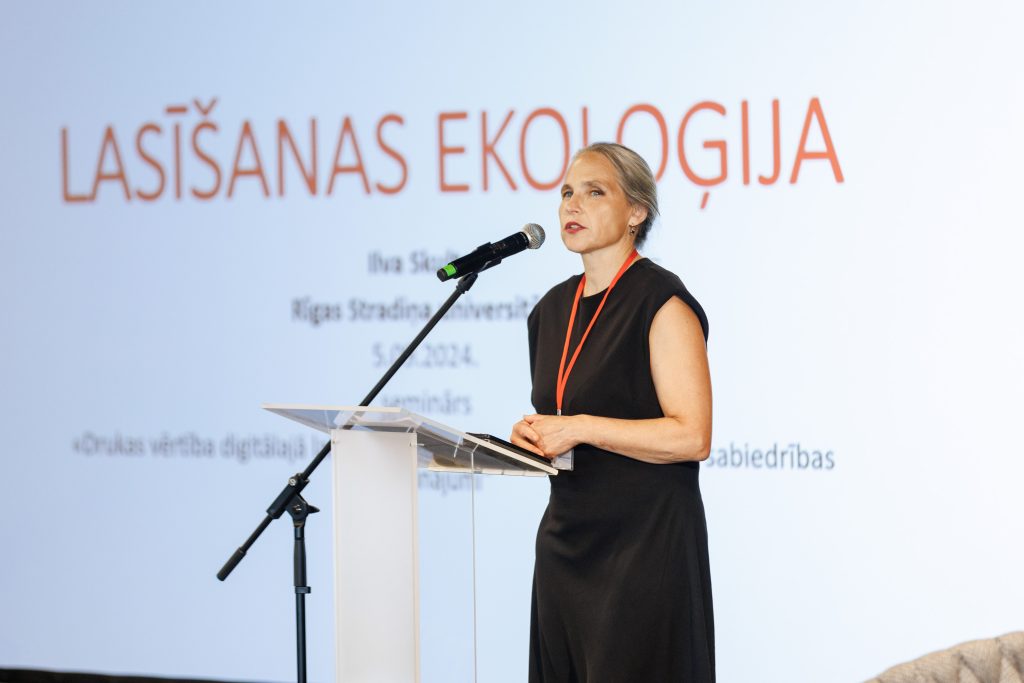
The information that flows into our working memory at any moment creates a ‘cognitive load,’” explained Ilva Skulte. “When this load exceeds our brain’s capacity — like water overflowing a drain — we can’t retain information or link it with existing knowledge. It affects our ability to learn, and so our understanding of the new material remains superficial.”
Skulte introduced the concept of reading ecology — the idea of fostering environments conducive to thoughtful reading. This includes adapting to personal, psychological, and environmental factors that affect reading habits — such as nurturing and exploring the reading environment, evaluating and recognising necessary adjustments (both positive and negative), responding to changes in our bodies and ways of thinking, exploring and understanding reading experiences and practices, cultivating individual reading habits with intention, and reflecting on social, psychological, and environmental aspects. In her presentation, she addressed the dilemmas of modern life and how sustainability and lifestyle choices shape our daily routines.
The seminar concluded with a panel discussion titled Print vs. Screen: Future Perspectives of Education and Society, held both in person and online. Panelists included Vija Kilbloka, Chairwoman of the Board of Zvaigzne ABC Publishing House; Iveta Ratinīka, poet, State Cultural Capital Fund Literature Expert and Director of Riga Āgenskalns State Gymnasium; Ilva Skulte, Associate Professor and Literary Critic at the Faculty of Social Sciences of Riga Stradiņš University; Rūdis Bebrišs, philosopher and Latvian language and literature teacher; and Edmunds Apsalons, Ombudsman of Public Service Media of Latvia, philosopher, and a book author.
This was the first seminar organised by SIA Poligrāfijas grupa MŪKUSALA on the value of print in the digital age and the challenges facing contemporary society. While many questions remain unanswered, the seminar underscored one thing: the conversation must continue — not through conflict, but with the recognition that print and digital media are not rivals. Both have essential roles in the modern world.